When Two Heads Are Better Than One: How Chikore High School Uses Collaborative Projects to Build the Skills That Matter Most
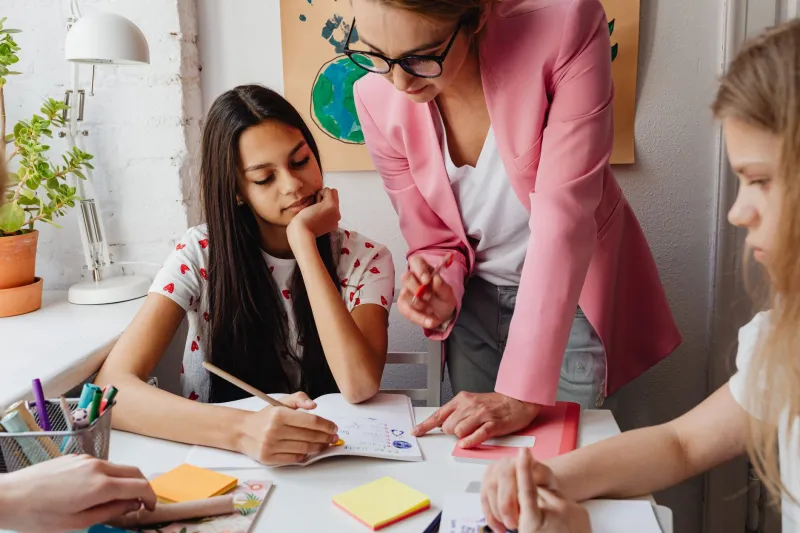
Ask most high school students what they think of group projects, and you will likely hear a familiar chorus of complaints. Someone always does less than their share. Someone else dominates every decision. The final product rarely reflects the best work of any individual member. Yet at Chikore High School, educators have arrived at a counterintuitive conclusion: those frustrations are not a flaw in the model. They are the point.
Chikore's approach to collaborative learning is built on the premise that the messiness of working with other people is not an obstacle to education—it is one of the most valuable educational experiences a student can have. The school has deliberately structured its academic programs to ensure that students are regularly placed in situations that require genuine interdependence, thoughtful communication, and the kind of productive conflict resolution that no standardized test can measure.
The Limits of Working Alone
American education has long celebrated the individual achiever. Grade point averages, honor rolls, and college admissions essays are all constructed around the singular narrative of personal excellence. Chikore does not dismiss the importance of individual effort—strong independent work habits remain a cornerstone of the school's academic expectations. But faculty here have recognized something that the research has been confirming for decades: the modern workplace is overwhelmingly team-based, and students who arrive there having only ever competed as individuals are often underprepared for its demands.
A 2023 survey by the National Association of Colleges and Employers identified teamwork and communication as the top two attributes employers seek in new graduates—ranking above technical knowledge in nearly every industry sector. Yet most high school curricula still reward students almost exclusively for what they can produce on their own. Chikore's collaborative learning framework is a direct response to that gap.
Designing Collaboration With Intention
Not every group project is created equal. At Chikore, faculty undergo structured professional development focused specifically on designing collaborative tasks that require genuine interdependence—meaning no single student can complete the assignment alone, and every team member's contribution is both visible and necessary.
In a recent junior-year environmental science unit, students were divided into cross-disciplinary teams and asked to develop a comprehensive sustainability proposal for a fictional mid-sized American city. Each team member was assigned a distinct domain: urban planning, economics, public health, and community engagement. The assignment was structured so that each section depended on the findings of the others. A student could not finalize the economic analysis without understanding the public health implications, and the community engagement strategy was meaningless without input from the urban planning component.
"What we saw was students who had never really talked to each other suddenly needing each other," said one Chikore science instructor. "That dependency created conversations that wouldn't have happened any other way."
The resulting presentations were notably more sophisticated than anything the same students had produced individually—not because the group made things easier, but because the group made things harder in the right ways.
Learning to Disagree Well
Perhaps the most undervalued dimension of Chikore's collaborative model is its explicit attention to conflict. Rather than treating disagreement as a problem to be avoided, faculty here frame it as an inevitable and instructive component of any meaningful team effort.
Students working on a semester-long humanities project—a multimedia documentary exploring the history of a local American community—described moments of genuine tension. Disagreements arose over narrative framing, over whose perspective to foreground, and over how much time to spend on certain historical periods. One student recounted a moment when two team members were so opposed on a central editorial decision that the group came to a standstill.
"Our teacher didn't step in and tell us what to do," the student explained. "She asked us to each articulate why we felt strongly and then find the place where our reasons actually overlapped. It took a while, but we got there—and the final version was better because of the argument."
This approach reflects a deliberate pedagogical philosophy. Chikore educators are trained to coach students through conflict rather than resolve it for them. The goal is not harmony for its own sake, but the development of what researchers call "constructive controversy"—the ability to advocate for a position while remaining genuinely open to being persuaded by a better one.
What Students Take Away
The skills cultivated through Chikore's collaborative projects extend well beyond any single assignment. Students who have moved through the program describe a measurable shift in how they approach problems, communicate under pressure, and relate to people whose working styles differ from their own.
One Chikore graduate, now in her sophomore year at a large public university, reflected on how her high school experience shaped her transition to college group work. "At Chikore, we talked about how we were going to work together before we started working. We set norms. We checked in. When I got to college and my professors put us in groups, I was the one who suggested we do that—and my teammates had no idea what I was talking about. It made a real difference."
That kind of transferable competency is precisely what Chikore's academic design is intended to produce. Collaboration is not treated as a soft skill or an add-on. It is embedded in the curriculum as a core academic discipline, one that demands as much rigor and reflection as any individual assignment.
A Community That Learns Together
Chikore High School's investment in collaborative learning also reflects something deeper about the institution's identity. The school's mission—inspiring minds and building futures—is inherently a collective endeavor. Students here are not simply preparing to succeed as individuals; they are being shaped into people who know how to build something meaningful alongside others.
In a culture that often prizes individual achievement above all else, that is a genuinely distinctive commitment. And for the students who experience it, it is frequently transformative.
The group project that caused the most frustration, the team dynamic that required the most patience, the disagreement that seemed impossible to resolve—these are often the experiences Chikore students remember most vividly, and for good reason. They are the moments when the most important learning happened.


