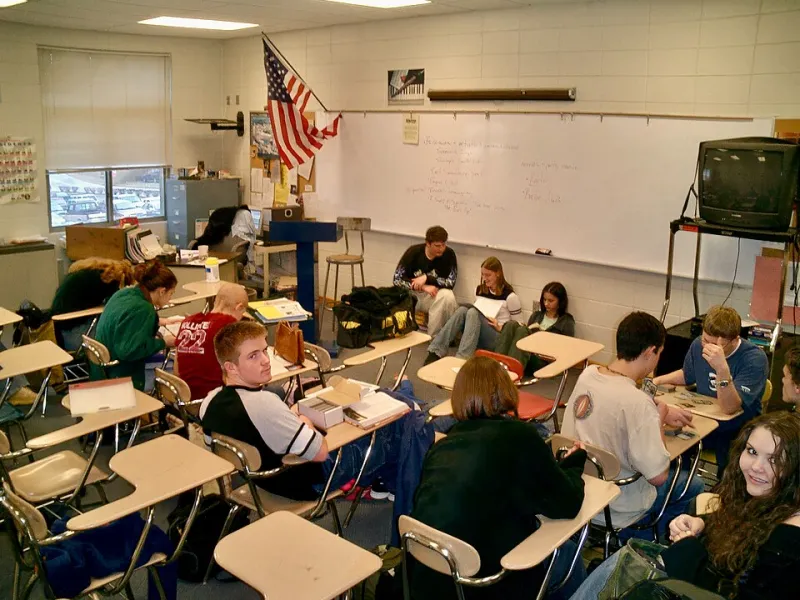
The Curriculum You Won't Find in a Textbook: How Chikore's Extracurricular Programs Build Real-World Ready Graduates
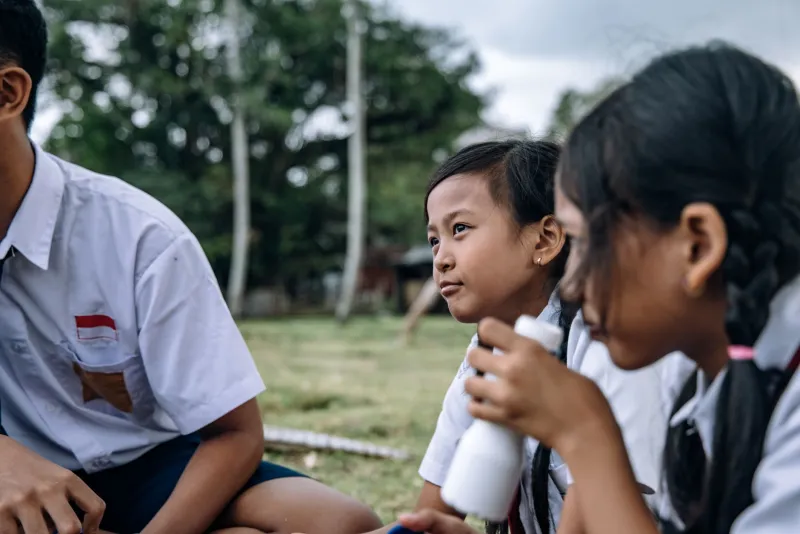
Ask any college admissions officer or hiring manager what separates a strong candidate from an exceptional one, and the answer rarely begins with GPA alone. Increasingly, the qualities that open doors — the ability to lead under pressure, to collaborate across differences, to recover from setbacks and keep moving forward — are precisely the qualities that develop outside of formal instruction. At Chikore High School, this understanding shapes not just how the school approaches academics, but how it envisions the entire student experience.
Beyond the Transcript
Chikore's academic offerings are rigorous. Advanced Placement courses, honors tracks, and specialized electives ensure that students are challenged intellectually and prepared for the demands of higher education. But school leadership has long recognized that academic preparation, on its own, is incomplete.
"We think about our students holistically," says Assistant Principal Jerome Whitfield. "A student who earns a 4.0 GPA but has never navigated a conflict within a team, never had to motivate others toward a shared goal, or never experienced the discomfort of failing at something and getting back up — that student may be academically prepared but not yet fully equipped for what comes next."
This philosophy is reflected in the breadth and intentionality of Chikore's extracurricular ecosystem. From student government and competitive debate to environmental advocacy clubs and mentorship-based community service programs, the school has built an infrastructure that makes participation accessible and meaningful for students across every interest and background.
Leadership That Goes Beyond a Title
One of the most consistent outcomes families and alumni cite is the development of genuine leadership capacity — not the performative kind that looks impressive on an application, but the functional kind that produces results in real situations.
Senior Amara Jennings serves as president of Chikore's student government association, a role she assumed after two years as a committee member. Her experience illustrates what leadership development looks like in practice. "In my junior year, we planned a school-wide mental health awareness event, and almost everything that could go wrong did. Speakers canceled last minute, our AV equipment failed, and we had twice the attendance we expected. I had to make fast decisions, keep my team calm, and adapt on the spot."
She pauses before adding: "No AP class taught me how to do that. But that experience absolutely prepared me for the kind of pressure I know I'll face in college and beyond."
Chikore's faculty advisors play a deliberate role in this development. Rather than solving problems for student leaders, advisors are trained to guide students through the problem-solving process — asking questions, offering frameworks, and trusting students to arrive at their own solutions. The result is a cohort of graduates who have genuinely practiced decision-making, not just observed it.
Resilience as a Learned Skill
The word "resilience" is often treated as an innate personality trait — something a person either has or doesn't. Chikore's approach challenges that assumption. Through structured programs that place students in situations requiring persistence and adaptability, the school actively cultivates resilience as a skill that can be built over time.
Chikore's competitive debate team offers a compelling case study. Debate demands that students research complex issues, construct and defend arguments under time pressure, and respond in real time to positions they may not have anticipated. Losses are part of the process, and the program's culture treats them as learning opportunities rather than failures.
"I lost my first three tournaments," recalls junior Marcus Bell, a member of the debate team for two years. "I wanted to quit after the second one. My coach sat with me and walked through every round — not to criticize, but to help me see exactly where my argument broke down and how to rebuild it. That process changed how I handle setbacks in every area of my life."
This kind of structured reflection — making failure instructive rather than simply discouraging — is a thread that runs through many of Chikore's extracurricular programs. It is also a quality that colleges and employers increasingly seek evidence of in young candidates.
Collaboration Across Difference
In a country as diverse as the United States, the ability to work effectively with people whose perspectives, backgrounds, and communication styles differ from one's own is not optional — it is essential. Chikore's community service initiatives are designed, in part, to develop exactly this capacity.
The school's partnership with local nonprofit organizations places students in volunteer roles that require sustained engagement with community members outside their immediate social circles. Whether tutoring elementary-aged students in under-resourced neighborhoods, participating in environmental restoration projects, or assisting at senior community centers, Chikore students are regularly placed in contexts where listening, patience, and adaptability are prerequisites for making a meaningful contribution.
"Community service at Chikore isn't about logging hours," explains Ms. Patricia Huang, who coordinates the school's service-learning program. "It's about developing the empathy and interpersonal intelligence that make students effective collaborators — in college group projects, in entry-level jobs, and eventually in leadership roles. Those skills have to be practiced in real contexts with real stakes."
What Colleges and Employers Are Actually Looking For
The National Association of Colleges and Employers (NACE) consistently identifies critical thinking, communication, teamwork, and leadership as the top attributes employers seek in new graduates. These are not skills taught in isolation through a single elective course. They are developed incrementally, through repeated experience, reflection, and growth — precisely the kind of development that extracurricular engagement at Chikore is structured to provide.
College admissions counselors similarly emphasize that they seek evidence of genuine engagement and impact, not simply a long list of club memberships. Chikore's programs are designed to support depth of involvement, encouraging students to take on increasing responsibility within activities over time rather than spreading themselves thin across many superficial commitments.
A Complete Education
At Chikore High School, the goal has always been to inspire minds and build futures — and futures, by definition, extend far beyond the boundaries of formal schooling. The lessons students absorb in AP classrooms are vital. But the lessons they carry from a failed debate round, a community service partnership, or a leadership challenge navigated with their peers may prove equally enduring.
For families interested in learning more about Chikore's extracurricular offerings, community service programs, and student leadership opportunities, we encourage you to explore the Student Life section of our website or reach out to our school counseling office to schedule a conversation.