Falling Forward: How Chikore High School Turns Setbacks Into the Foundation for Lasting Success
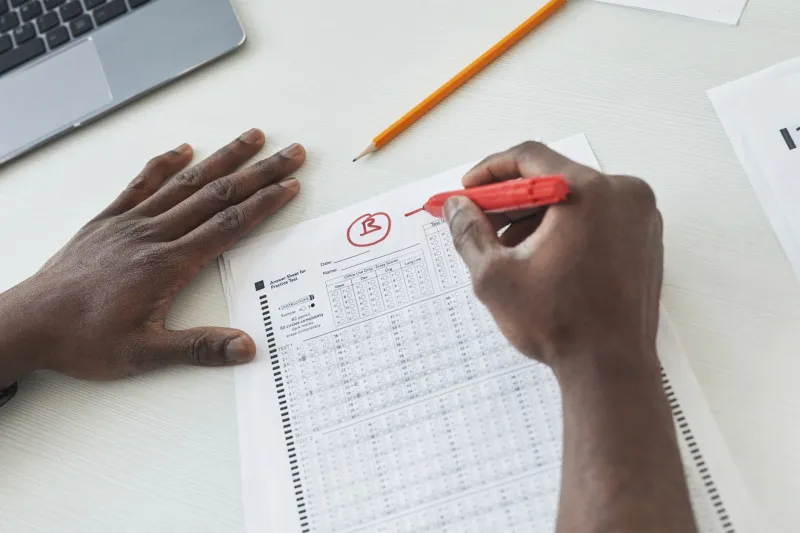
There is a moment most high school students know well: the sinking feeling of a grade that did not reflect their effort, a project that fell apart despite careful planning, or a performance that simply did not go as hoped. For many young people, that moment becomes a wall — something to be avoided, dreaded, or quietly buried. At Chikore High School, however, that same moment is treated as a doorway.
Building resilience is not an elective at Chikore. It is woven deliberately into the academic experience, rooted in the belief that students who learn to process and persist through failure develop capabilities that no exam score can fully capture. Across departments and grade levels, faculty have adopted practices designed to shift the way students understand struggle — not as evidence of inadequacy, but as an essential feature of genuine learning.
Reframing the Language of Failure
One of the most immediate changes students notice when they arrive at Chikore is the language teachers use around mistakes. Rather than marking an incorrect answer and moving on, instructors are trained to pause and ask students to reconstruct their reasoning. What did you understand? Where did the thinking shift? What would you change now that you see the result?
This approach, sometimes referred to as error analysis, does more than correct a wrong answer — it teaches students to treat their own thought processes as worthy of examination. Over time, this builds what educators call metacognitive awareness: the ability to think about how one thinks, and to adjust accordingly.
"I used to hide my tests if I did badly," admitted one junior who asked to remain anonymous. "Now I actually bring them to my teacher to go over. It feels different when the mistake is just information instead of a judgment."
That shift — from shame to curiosity — is precisely what Chikore's academic culture is designed to cultivate.
The Iterative Assignment Model
Across multiple disciplines, Chikore faculty have moved away from single-submission assignments toward an iterative model in which students submit drafts, receive structured feedback, and revise before a final grade is recorded. This is not about lowering expectations. It is about aligning the classroom more honestly with how expertise is actually developed.
In English and humanities courses, multi-draft essays are standard practice. In STEM classes, lab reports and problem sets frequently go through a revision cycle. Even in the arts, students present works-in-progress to their peers before final showcases, receiving critique as a natural part of the creative process.
The message embedded in this structure is consistent: your first attempt is not your final word. Growth happens between drafts.
"The iterative model fundamentally changes what a student believes is possible," said one Chikore English teacher. "When they see their own writing improve from draft one to draft three, they stop asking 'Am I good at this?' and start asking 'How do I get better?' That is a completely different orientation toward learning."
Structured Reflection as a Core Practice
Beyond assignments, Chikore incorporates structured reflection as a regular classroom ritual. At the end of major assessments, students complete a brief written reflection — not about the content itself, but about their process. What preparation strategies did they use? What would they do differently? What surprised them?
These reflections are not graded for correctness. They are read by teachers as windows into student thinking, and they often become the basis for one-on-one conversations between educators and students who may be struggling silently.
For sophomore Marcus T., one such conversation proved pivotal. After a difficult stretch in his AP Chemistry course, his teacher noticed a pattern in his reflections — he was consistently underestimating how much review time he needed before exams. Rather than simply urging him to study more, his teacher worked with him to build a concrete study schedule and introduced him to the school's peer tutoring network.
"She didn't just tell me to try harder," Marcus recalled. "She actually helped me figure out what trying harder needed to look like for me specifically. That made all the difference."
Advisory Programs and Emotional Scaffolding
Resilience is not purely cognitive — it is also deeply emotional. Chikore recognizes that students cannot effectively process failure if they are overwhelmed, isolated, or without language to describe what they are experiencing. This is where the school's advisory program plays a critical role.
Each student is assigned to a small advisory group led by a faculty member who serves as a consistent point of contact throughout their high school years. Advisory meetings address not only academic planning but also the emotional dimensions of school life: managing disappointment, navigating peer dynamics, and building the self-awareness necessary to recover from setbacks with intention rather than reaction.
Counselors are integrated into this structure as well, offering individual support for students who need deeper guidance. The goal is not to remove difficulty from students' lives, but to ensure no student faces difficulty entirely alone.
What Parents Can Do at Home
The resilience Chikore works to build inside the classroom is most durable when it is reinforced at home. Families play an irreplaceable role in shaping how students relate to failure, often without realizing the influence their responses carry.
Here are several evidence-informed approaches parents can adopt:
Normalize imperfection in everyday conversation. Share your own experiences with failure — professional, personal, or otherwise — and speak candidly about what you learned from them. When students see that capable adults encounter and recover from setbacks, failure loses some of its stigma.
Resist the impulse to rescue immediately. When your child faces a difficult assignment or a disappointing result, offer presence and empathy before jumping to solutions. Ask questions: What do you think went wrong? What might you try differently? Allowing students to sit with a challenge briefly — rather than solving it for them — builds the tolerance for discomfort that resilience requires.
Praise process, not outcome. Research consistently shows that praising effort, strategy, and persistence is more effective at building resilience than praising intelligence or talent. "You worked really hard on that" lands differently than "You're so smart" — especially when the result is disappointing.
Maintain perspective on grades. A single test score, semester grade, or academic stumble does not define a student's trajectory. When parents respond to setbacks with calm perspective rather than alarm, they model the very equanimity they hope to see in their children.
Building Students Who Are Ready for What Comes Next
The world Chikore graduates will enter — in college, in careers, in civic life — will not be free of failure. Deadlines will be missed. Projects will not land as planned. Relationships will require repair. The question is not whether students will encounter adversity, but whether they will have the internal resources to meet it with clarity and courage.
At Chikore High School, preparing students for that reality is not an afterthought. It is among the most important work the school does — and it begins, quietly and consistently, every time a student is invited to look honestly at a mistake and ask not "What does this say about me?" but "What does this teach me?"
That distinction, practiced hundreds of times across four years of high school, is what transforms a stumble into a step forward.