Graduating Broke: Why Money Skills Are the Most Overlooked Part of Getting Students College-Ready
Every spring, thousands of high school seniors across the United States celebrate a hard-earned milestone: graduation. They have survived four years of coursework, standardized testing, extracurricular commitments, and college applications. They have been coached on essay writing, interview skills, and time management. And yet, a striking number of them will arrive on a college campus in the fall without knowing how to build a budget, interpret a financial aid award letter, or understand what they are actually agreeing to when they sign a student loan document.
This is not a criticism of students. It is a reflection of a systemic gap in how American high schools define college readiness. At Chikore High School, we have made it a priority to confront that gap directly—because we believe that inspiring minds and building futures requires preparing students not just for the academic demands of higher education, but for the financial realities that come with it.
The Quiet Crisis in Plain Sight
The numbers are difficult to ignore. According to the Federal Reserve, Americans collectively hold more than $1.7 trillion in student loan debt, making it the second-largest category of consumer debt in the country. A significant portion of that burden falls on borrowers who report that they did not fully understand the terms of their loans when they signed for them.
Meanwhile, surveys consistently show that teenagers lack foundational financial knowledge. Many cannot define compound interest, distinguish between a debit card and a credit card, or explain what a credit score measures. These are not obscure concepts. They are the basic tools required to make informed decisions about one of the most expensive investments a young person will ever make: a college education.
The consequences of this knowledge deficit extend well beyond graduation. Students who enter college without financial literacy are more likely to overspend in their first semester, take on more loan debt than necessary, and struggle to manage living expenses independently. The stress that follows can directly undermine academic performance and mental well-being—two outcomes that Chikore High School works every day to protect.
Why Traditional Curricula Fall Short
Most high school academic programs are built around college admission requirements: English, mathematics, science, history, and a foreign language. Financial education, when it exists at all, is often tucked into a single elective course or covered briefly within a broader economics class. In many states, there is no graduation requirement for personal finance instruction whatsoever.
The result is a generation of students who are academically credentialed but financially underprepared. They know how to analyze a piece of literature or write a research paper, but they have never sat down to map out what their first year of college will actually cost—or how they plan to pay for it.
At Chikore High School, we do not accept that this is simply the way things have to be. Financial literacy is not a luxury subject. It is a life skill, and it belongs alongside every other form of preparation we offer our students.
How Chikore Is Integrating Financial Education
Over the past several years, Chikore High School has worked to weave financial literacy into the student experience in meaningful, practical ways—rather than treating it as an afterthought.
Real-World Budget Simulations. Students participate in exercises that mirror actual financial decision-making. They are given hypothetical income figures, college cost estimates, and a list of monthly expenses, then asked to build a realistic budget. These simulations force students to confront trade-offs: Do you spend more on housing and cut back on food? What happens to your plan if your financial aid package is smaller than expected?
Financial Aid Literacy Workshops. Each year, Chikore hosts workshops specifically designed to demystify the financial aid process. Families learn how to read the Free Application for Federal Student Aid (FAFSA), compare award letters from different institutions, and evaluate whether a school's offered aid package genuinely makes it affordable. These sessions are open to students and parents alike, because financial decisions of this magnitude should never be made in isolation.
Student Loan Education. Before a Chikore student considers signing any loan agreement, we want them to understand exactly what they are committing to. Our programming covers the distinction between federal and private loans, how interest accrues, what income-driven repayment plans look like, and how loan balances can grow if payments are deferred. The goal is informed consent—not fear, but clarity.
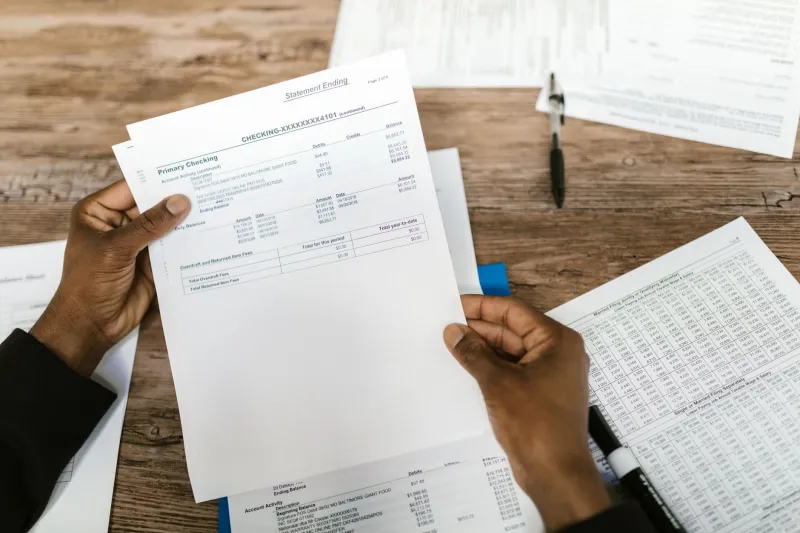
Credit and Banking Basics. Many students arrive at college without a checking account, a debit card, or any experience managing their own money. Chikore's financial literacy programming addresses the fundamentals: how to open a bank account, what a credit score is and why it matters, how to avoid overdraft fees, and how to use credit responsibly as a young adult.
A Framework for Families
School programming alone cannot do all of the work. Financial literacy is most durable when it is reinforced at home, and there are concrete steps families can take to build their student's financial confidence before college begins.
Start the money conversation early. Many families treat financial matters as private or even uncomfortable topics. However, students who have open, ongoing conversations about household budgeting, savings, and spending habits are better prepared to manage their own finances independently. You do not need to share every detail of your personal finances—but normalizing the conversation is a powerful first step.
Give students practice managing real money. Whether through an allowance, a part-time job, or a small spending account, students benefit enormously from hands-on experience. Let them make low-stakes mistakes now, while the consequences are manageable, rather than high-stakes mistakes in their first semester of college.
Walk through the college cost picture together. Sit down as a family and build an honest estimate of what college will cost—tuition, room and board, books, transportation, personal expenses, and any loan interest. Compare that figure to your expected financial aid and savings. This exercise grounds abstract numbers in reality and helps students understand the weight of the decisions they are making.
Teach them to read before they sign. Loan documents, lease agreements, credit card applications—these are not documents to skim. Encourage your student to read carefully, ask questions, and never sign anything they do not fully understand.
The Bigger Picture
At Chikore High School, college readiness has always meant more than academic preparation. It means sending students into the world equipped to make sound decisions, advocate for themselves, and build stable, fulfilling lives. Financial literacy is an indispensable part of that preparation.
A student who graduates knowing how to analyze a poem but not how to manage a checking account is, in a very real sense, only half-ready for what comes next. We are committed to closing that gap—because the futures we are building here deserve a foundation that is as financially solid as it is academically strong.
Families who want to learn more about Chikore's financial literacy programming and college readiness resources are encouraged to connect with our college counseling office. The conversation about money is one worth starting today.