Thinking With the Machine: Chikore High School's AI Literacy Framework for 2026
Artificial intelligence is no longer a novelty in the classroom. In 2026, it is part of the research stack, the writing process, the study session, and, increasingly, the workplace that Chikore High School students will enter. The question facing schools is not whether students will use these tools. It is whether they will use them with judgment.
At Chikore High School, the answer is deliberate. Rather than banning AI or pretending it is neutral, the school is integrating AI literacy across academic programs. The aim is not to replace student thinking with machine output. It is to teach students to treat AI as a thinking partner—a tool that can help them brainstorm, test ideas, and find gaps, but never a substitute for their own reasoning, verification, and voice.
Why Judgment Matters More Than Access
The calculator did not remove the need to understand arithmetic. It changed the kind of arithmetic students needed to do by hand and raised the importance of estimation, interpretation, and error-checking. AI is following a similar path. When a tool can generate a paragraph, summarize a source, or suggest a solution, the value of a student's education shifts toward the abilities that machines do not reliably supply: framing good questions, spotting weak evidence, recognizing bias, and explaining a conclusion in plain language.
That is why Chikore's approach begins with academic integrity as a habit of mind, not simply a list of prohibited behaviors. Students learn that responsible use is visible use. They are asked to show their process, keep drafts, cite sources, and explain what the tool contributed. The goal is not to catch students. It is to build the kind of transparency that colleges and employers now expect.
The Four-Step Habit: Ask, Audit, Attribute, Apply
Chikore's AI literacy work is organized around a practical framework that can be used in any discipline.
Ask
Students begin by defining the question themselves. AI can help widen a brainstorm, generate counterarguments, or suggest a study sequence, but the student must own the problem. A useful prompt is not a command to produce an answer. It is a request for help thinking. Students are encouraged to ask: What am I trying to understand? What would a strong answer need to include? What assumptions am I bringing to this task?
Audit
Every output is treated as a claim to be checked, not a fact to be accepted. Students learn to look for missing sources, suspicious certainty, outdated information, and patterns of bias. In history, that may mean comparing an AI summary against primary documents. In science, it may mean testing whether a suggested explanation matches lab data. In English, it may mean asking whether a generated interpretation can be supported with evidence from the text. The audit habit is simple: pause before you trust.
Attribute
Students practice disclosing how AI was used and distinguishing their own work from machine-generated material. Attribution is not only about avoiding plagiarism. It is about intellectual honesty. A student who can say precisely what the tool did and what they did is demonstrating control over the work.
Apply
Finally, students use AI output as a starting point for their own application. They revise, test, explain, and transfer the idea to a new problem. A summary becomes a class presentation. A generated outline becomes a researched argument. A suggested solution becomes a lab design. The final step matters because it turns passive consumption into active learning.
What This Looks Like in a Chikore Classroom
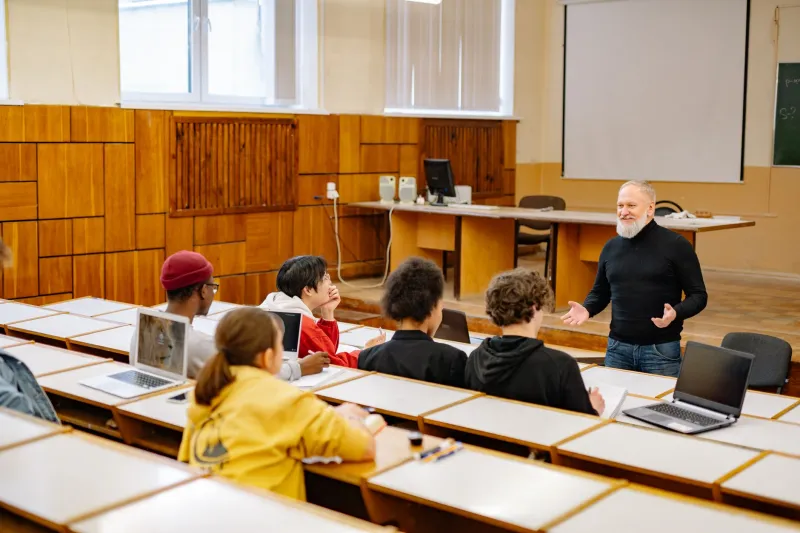
In a Chikore humanities course, students might use AI to generate possible interpretations of a historical event, then spend the lesson testing those interpretations against primary sources and scholarly articles. In a science class, a teacher might ask students to compare an AI-generated explanation of a phenomenon with their own experimental observations and identify where the explanation breaks down. In a writing workshop, students might use AI to produce a deliberately flawed draft, then revise it for evidence, tone, and accuracy.
These exercises do not pretend that AI is always right. They teach students to notice when it is wrong—and to explain why. That skill is becoming as foundational as reading a graph or evaluating a website.
A Family Guide for Home
Families do not need to become AI experts to support this work. They can begin with better questions. Ask your student to show you how they used a tool, not just what it produced. Ask what they checked and what they decided to change. Encourage them to keep a simple record of sources and prompts. Set expectations that AI can support brainstorming and practice, but cannot stand in for the student's own explanation.
It also helps to model healthy skepticism at home. When a family sees a surprising claim online, they can ask together: Who says this? What evidence is offered? What might be missing? That habit reinforces the same message students hear in class.
The Standard We're Building
AI tools will continue to change in 2026 and beyond. The specific platforms students use today may look different in a few years. The standard Chikore High School is building is more durable: students who can think with a machine without surrendering their judgment to it. That is the difference between using a tool and being used by one.