Why the Best Students at Chikore High School Are the Ones Who Never Stop Asking Why

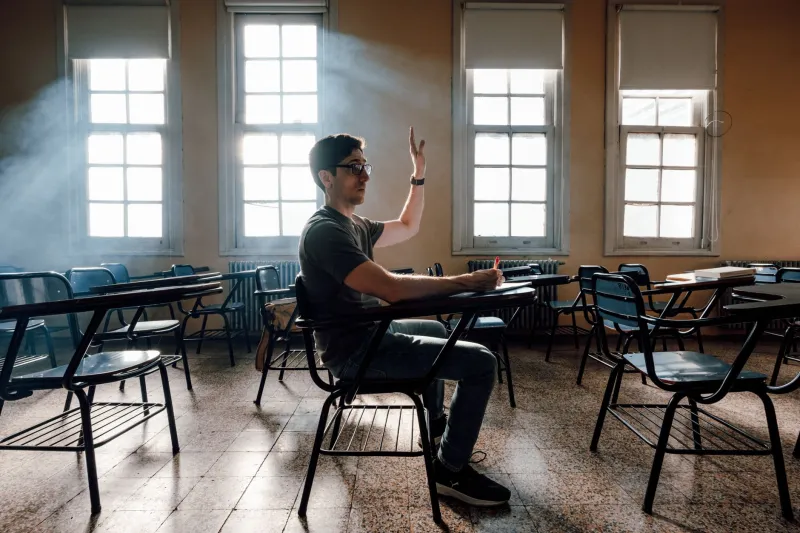
There is a particular kind of student that every teacher remembers. Not necessarily the one who earns the highest grade on every exam, but the one who leans forward in their seat and asks a question nobody else thought to raise. The one who, upon receiving an answer, asks a follow-up. The one who leaves class with more on their mind than when they arrived.
At Chikore High School, that student is not an anomaly. That student is the goal.
In an educational landscape that has long rewarded recall and accuracy above all else, Chikore is making a deliberate institutional shift — one that places intellectual curiosity at the very center of the academic experience. The premise is straightforward, even if the execution requires genuine commitment: students who learn to ask better questions become better thinkers, better collaborators, and more adaptable human beings. And those qualities, far more than any single test score, are what colleges and employers are actively seeking.
The Problem With Always Having the Answer
For much of a student's academic life, the implicit message is clear: get the right answer, earn the reward. Raise your hand when you know. Stay quiet when you don't. This dynamic, while efficient in some respects, produces a particular kind of learner — one who is skilled at retrieving information but hesitant to wrestle with ambiguity.
Chikore's faculty recognized this pattern and began asking their own institutional question: what if we redesigned the classroom around inquiry rather than answer-delivery?
The concern was never that academic rigor would suffer. Quite the opposite. Research in cognitive science consistently demonstrates that students who engage with material through questioning — generating their own puzzles, challenging their own assumptions — develop deeper conceptual understanding and stronger long-term retention than those who passively receive instruction. Curiosity, it turns out, is not a distraction from learning. It is the engine of it.
How Chikore Builds a Culture of Inquiry
The shift toward question-driven learning at Chikore is not a single program or initiative. It is woven into the fabric of daily instruction across departments.
In humanities courses, students are regularly asked to begin a unit not with a lecture, but with a provocation — a primary source document, a controversial historical image, or a short piece of writing that resists easy interpretation. Before any content is introduced, students spend time generating questions. What do we not yet understand? What assumptions are embedded in this text? What would we need to know to evaluate this fairly? Only after that initial inquiry does formal instruction begin, and when it does, students are already invested because they have already begun to wonder.
In science and mathematics, teachers have adopted what the faculty informally calls the "incomplete problem" model. Rather than presenting students with fully formed equations or neatly packaged lab procedures, instructors introduce scenarios with missing variables and ask students to identify what additional information they would need before they could even begin solving. The exercise trains students to think about the structure of a problem before they attempt a solution — a skill that proves invaluable in both academic and professional contexts.
Across all disciplines, Chikore teachers are trained to respond to student questions not with immediate answers, but with redirecting questions of their own. "What makes you ask that?" "What do you already know that might help you work through it?" "What would have to be true for your instinct to be correct?" This Socratic approach, practiced consistently, teaches students that their own thinking is a legitimate starting point — not something to be replaced by an authority's answer, but something to be refined through dialogue.
Student Stories: When Asking Became a Superpower
The impact of this approach becomes most visible in the students themselves.
Consider the experience of a junior who enrolled in Chikore's AP Environmental Science course with a stated goal of earning a high grade and strengthening her college application. Midway through the year, while reviewing data on regional water quality, she found herself frustrated by what the data did not include. She brought that frustration to her teacher as a question: why weren't certain rural communities represented in the dataset?
That single question became the foundation for an independent research project she pursued over the following semester, ultimately presenting her findings at a regional student science symposium. She did not simply consume information — she interrogated it. And the colleges she applied to noticed. In her own words, "I used to think asking questions meant I didn't understand something. Now I know it means I'm actually paying attention."
A sophomore in Chikore's World History course describes a similar turning point. Assigned to analyze a speech from the Cold War era, he initially searched for the "main point" the teacher wanted him to identify. When his teacher pushed back and asked what he found confusing or incomplete about the speech, he paused. Then he asked: who was the intended audience, and would they have heard this differently than we do today? That question opened a classroom discussion that lasted the entire period and became the basis for a comparative essay his teacher later described as one of the most sophisticated pieces of student writing she had reviewed in years.
These are not exceptional students in the traditional sense. They are students who were given permission — and structure — to be genuinely curious.
Why This Matters Beyond the Classroom
Colleges and universities across the country have grown increasingly vocal about what they are looking for in applicants. Beyond grades and test scores, admissions officers consistently cite intellectual vitality, independent thinking, and the ability to engage with complexity as qualities that distinguish exceptional candidates. Chikore's inquiry-based approach directly develops each of these capacities.
But the implications extend well beyond the college application. In virtually every professional field, the ability to ask the right question at the right moment is more valuable than the ability to produce a memorized answer. Physicians who ask better diagnostic questions save lives. Engineers who question design assumptions prevent failures. Entrepreneurs who interrogate market assumptions build more durable companies. The students leaving Chikore are being prepared not just for the next academic chapter, but for careers and lives that will demand ongoing intellectual flexibility.
Curiosity as a Lifelong Practice
At its core, what Chikore High School is teaching is not a technique. It is an orientation — a way of moving through the world that treats every encounter with new information as an invitation rather than a transaction.
The student who graduates having mastered this orientation carries something that no exam can measure and no single course can fully confer. They carry the habit of genuine engagement. They carry the confidence to sit with uncertainty without retreating into the comfort of a quick answer. They carry, in other words, the foundation of a genuinely educated mind.
At Chikore, that is precisely the point.