Thriving, Not Just Surviving: How Chikore High School Puts Student Mental Health at the Center of Academic Life
For many high-achieving students, the pressure to excel can feel relentless. Advanced coursework, extracurricular commitments, college preparation, and the constant hum of social comparison create a weight that is difficult to quantify on any report card. Yet the consequences are measurable — and increasingly, they are alarming.
National data from the American Psychological Association consistently shows that adolescents today report higher levels of stress than adults, with academic pressure ranking among the top contributing factors. Among high-performing students specifically, the paradox is striking: the very drive that propels them toward achievement can quietly erode the foundation that makes sustained success possible.
At Chikore High School, this reality is not ignored or minimized. It is met directly — with intention, resources, and a culture that refuses to treat mental wellness as an afterthought.
The Hidden Cost of High Achievement
Burnout does not announce itself with a single dramatic moment. It accumulates gradually — in the student who stops raising her hand in class despite knowing the answers, in the junior who has stopped sleeping more than five hours a night, in the senior who has achieved everything on paper but feels nothing resembling joy.
"We see students who are performing at an extraordinarily high level, but when you sit with them, you realize they are running on empty," says one of Chikore's school counselors. "The grades are there. The résumé looks impressive. But internally, something important has gone quiet."
This disconnection between outward performance and inner experience is a hallmark of what researchers call high-functioning anxiety — a state in which students maintain productivity while quietly struggling with persistent worry, perfectionism, and fear of failure. Left unaddressed, it can lead to more serious mental health challenges and, ironically, a decline in the very academic performance students are working so hard to protect.
A Deliberate Shift in School Culture
Chikore High School has made a conscious institutional decision: academic excellence and emotional well-being are not competing priorities. They are complementary ones.
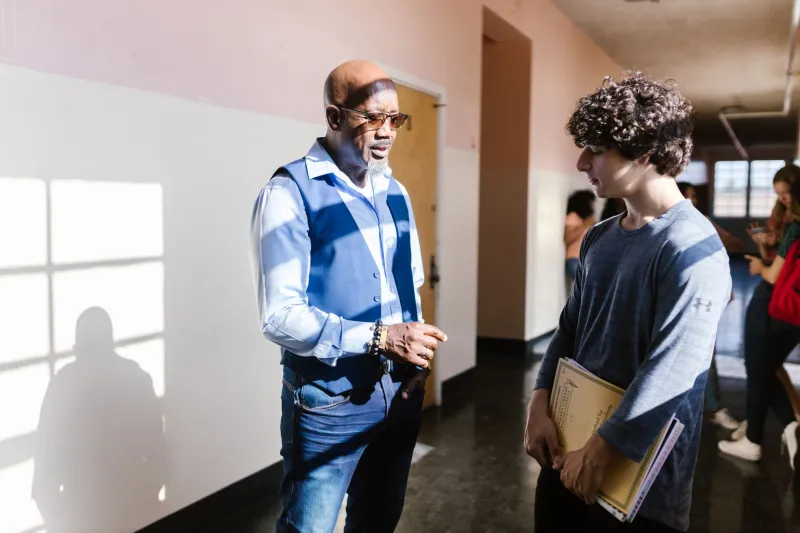
This philosophy is woven into daily school life in ways both visible and subtle. Advisory periods are structured to give students consistent, low-stakes time with a trusted adult. Counselors maintain open-door availability, not just crisis intervention appointments. Classroom conversations about stress management, self-advocacy, and emotional regulation are treated as legitimate academic content — not interruptions to learning.
"We want students to understand that asking for help is not a weakness," explains a member of Chikore's counseling team. "It is actually one of the most sophisticated skills a young person can develop. The ability to recognize when you are struggling and to reach out — that is emotional intelligence in action."
The school has also worked to recalibrate the way success is discussed in hallways, classrooms, and parent communications. Celebrating a student's growth, resilience, or creative risk-taking carries the same institutional weight as celebrating a perfect test score.
Evidence-Based Strategies in Practice
Chikore's approach to student mental health is not built on sentiment alone. It draws from a growing body of research on adolescent development, stress physiology, and the science of resilience.
Mindfulness practices have been integrated into select advisory and physical education periods, giving students concrete tools for managing acute stress responses. Cognitive-behavioral frameworks — the same approaches used in clinical therapy — inform how counselors teach students to examine and reframe unhelpful thought patterns.
Perhaps most significantly, Chikore has invested in proactive outreach rather than reactive support. Rather than waiting for students to reach a breaking point, counselors conduct regular check-ins with students identified as carrying high academic or personal loads. Early intervention, the research consistently shows, produces meaningfully better outcomes than crisis-stage support.
What Families Can Do at Home
School-based support is most effective when it is reinforced by the home environment. Chikore's counseling team offers families several evidence-aligned strategies for fostering resilience alongside academic ambition.
Normalize imperfection in conversation. When parents and guardians share their own experiences of failure, frustration, or uncertainty, they give students permission to be human. The student who has never seen an adult navigate disappointment gracefully has no model for doing so herself.
Protect sleep as a non-negotiable. Adolescent brains require eight to ten hours of sleep for optimal cognitive function and emotional regulation. Treating sleep as a luxury — something sacrificed for studying — is a false economy. The research is unambiguous: sleep-deprived students retain less, perform worse under pressure, and are significantly more vulnerable to anxiety and depression.
Ask different questions. Shifting the dinner table conversation from "What grade did you get?" to "What did you find genuinely interesting today?" or "What felt hard, and how did you handle it?" redirects students' self-worth away from performance metrics and toward the qualities that actually predict long-term flourishing.
Watch for withdrawal, not just grades. A student who is struggling is not always a student whose GPA has slipped. Withdrawal from friendships, loss of interest in activities they once loved, persistent fatigue, and irritability can all signal that something important needs attention.
Redefining What It Means to Succeed
At its core, Chikore High School's commitment to student wellness is a statement about values — about the kind of adults this institution is working to send into the world.
A student who graduates with a strong academic record and an equally strong sense of self, the ability to manage adversity, and the emotional vocabulary to ask for support when needed is not merely a college-ready student. She is a life-ready one.
"We are not asking students to choose between ambition and well-being," says a Chikore counselor. "We are showing them that genuine, sustainable achievement is only possible when both are tended to."
In a broader educational landscape that still too often reduces student value to a GPA and a test score, that message is not just refreshing. It may be the most important lesson Chikore teaches.