A New Beginning, A Better Fit: Why Joining Chikore High School Mid-Journey Can Be the Best Decision a Student Makes

The conventional wisdom about high school transfers is largely pessimistic. Students who change schools — particularly in the middle of the academic year — are often assumed to be at a disadvantage: socially displaced, academically disrupted, and emotionally unsettled. The data, and the lived experience of students at Chikore High School, complicate that narrative considerably.
For a meaningful number of Chikore students, transferring was not a setback. It was a turning point.
The Psychology of the Fresh Start
Research in behavioral psychology has long documented the power of what scholars call the "fresh start effect" — the human tendency to pursue meaningful change more effectively when a transition point provides psychological distance from previous patterns and self-perceptions. New beginnings, whether they arrive at the start of a new year, a new month, or a new school, create a mental reset that can be genuinely transformative.
For transfer students, this effect is particularly potent. Arriving at a new institution means arriving without the accumulated social identity — the labels, reputations, and relationship dynamics — that can constrain a student's sense of who they are and what they are capable of. At Chikore, that blank slate is not just a psychological phenomenon. It is an opportunity that the school's culture is explicitly designed to honor.
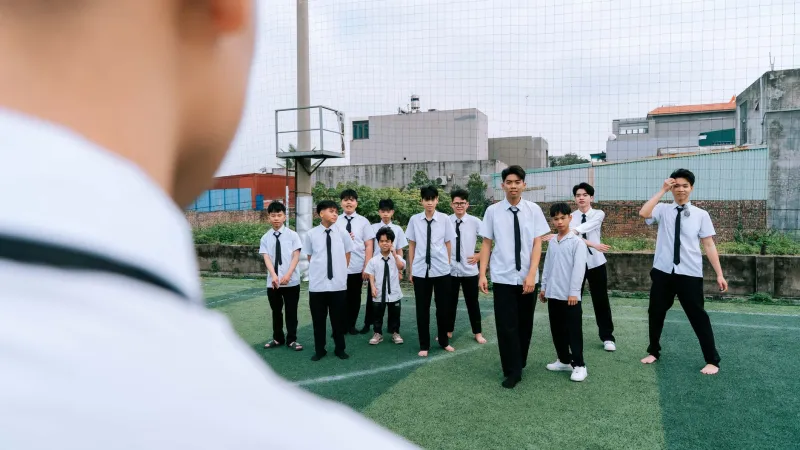
Students who arrive as transfers are not treated as newcomers who need to catch up. They are welcomed as individuals who bring perspective, experience, and a story that enriches the community they are joining.
What Makes Chikore's Integration Process Different
Transferring into any school involves logistical complexity — course equivalencies, credit transfers, schedule adjustments, and the simple challenge of learning where everything is. Chikore's administrative and advising teams work to make those practical transitions as seamless as possible, ensuring that students are appropriately placed and that their prior academic work is recognized and respected.
But the more meaningful dimension of Chikore's approach to transfer students is cultural rather than administrative. The school's emphasis on mentorship, collaborative learning, and genuine community connection means that new students have multiple natural entry points into the social fabric of the institution. Small-group academic structures, extracurricular programs, and advisory relationships all provide contexts in which a student who is new to the building can quickly become known as an individual rather than an outsider.
Peer mentors — upperclassmen who volunteer to support new students during their first weeks — play a particularly important role. These relationships often extend well beyond the formal orientation period, evolving into genuine friendships that anchor transfer students within the broader community.
When Timing Becomes an Advantage
One of the less intuitive findings from Chikore's experience with transfer students is that arriving at a non-traditional time — mid-semester, between grade levels, or at the start of junior year — sometimes confers specific advantages.
Students who transfer at the beginning of sophomore or junior year, for example, often find that the timing aligns naturally with a period of increased academic seriousness. Chikore's upperclassmen culture is oriented toward purpose and forward momentum, and students who arrive during that phase can find themselves quickly embedded in an environment that matches and elevates their ambitions.
Mid-year transfers, while logistically more complex, bring their own unexpected benefits. Because the school year is already in motion, new students often find that the social landscape is more settled and navigable than it would be during the chaotic first weeks of September. Friend groups are established, routines are in place, and the general energy is more focused — all of which can actually make genuine connection easier to achieve.
Rewriting the Academic Narrative
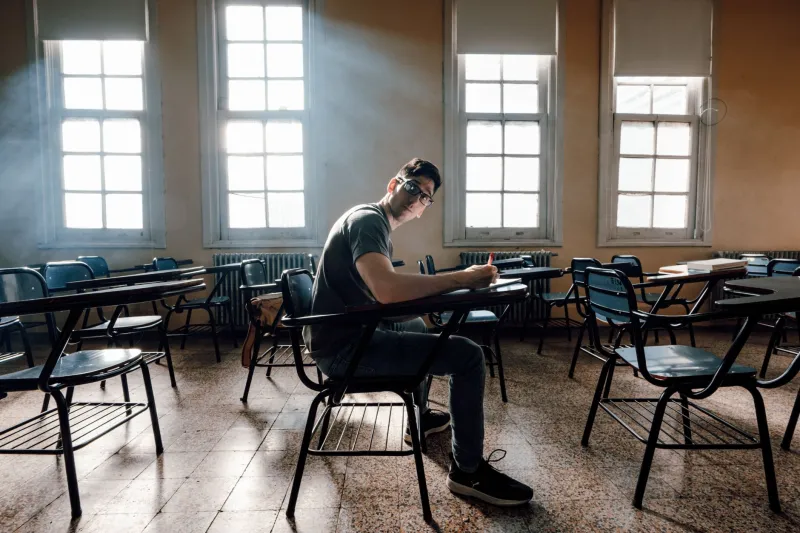
For some transfer students, the move to Chikore represents more than a change of address. It represents a conscious decision to rewrite an academic narrative that had stalled or gone in the wrong direction. Perhaps a previous school's environment was not conducive to their learning style. Perhaps family circumstances necessitated a move. Perhaps they simply needed a different kind of challenge.
Whatever the reason, Chikore's academic programs are structured to meet students where they are and build from that foundation. Advisors work individually with transfer students to assess their academic standing, identify areas of strength, and develop a plan that is both realistic and ambitious. The goal is never simply to slot a student into an existing track — it is to understand what that particular student needs in order to move forward effectively.
Many students who arrived at Chikore with inconsistent academic histories have gone on to achieve outcomes that genuinely surprised them: stronger GPA trajectories, meaningful extracurricular involvement, and college acceptances that reflected genuine growth rather than a polished surface.
For Families Considering a Transfer
Parents who are weighing a mid-year or between-year transfer to Chikore often carry anxiety about the social dimension of the change — particularly for students who are already navigating the social complexity of adolescence. That concern is understandable and worth taking seriously.
What Chikore's experience consistently demonstrates, however, is that students who arrive with a genuine openness to new relationships and a willingness to engage with the community tend to integrate more quickly and more deeply than anyone anticipates. The school's culture actively works to ensure that no student remains on the periphery for long.
Families are encouraged to connect with Chikore's admissions and counseling teams early in the process — not just to navigate paperwork, but to begin building the relationships that will support a student's transition from day one.
The Broader Lesson
The transfer student experience at Chikore High School offers a broader insight that applies well beyond school enrollment decisions. Progress is rarely linear. The path that leads to growth and fulfillment is not always the one that begins at the conventional starting point or adheres to the expected timeline.
For the students who have found their stride at Chikore precisely because they arrived when they did — not in spite of the unconventional timing, but because of it — that lesson is already deeply understood.