The Cardboard Test: Inside Chikore High School's Invention Lab
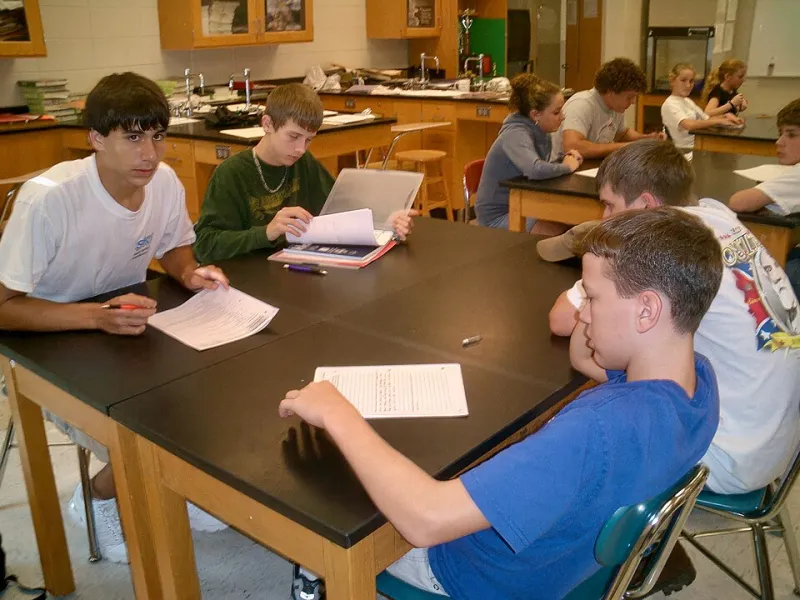
Photo: Harrison Keely, CC BY 4.0, via Wikimedia Commons
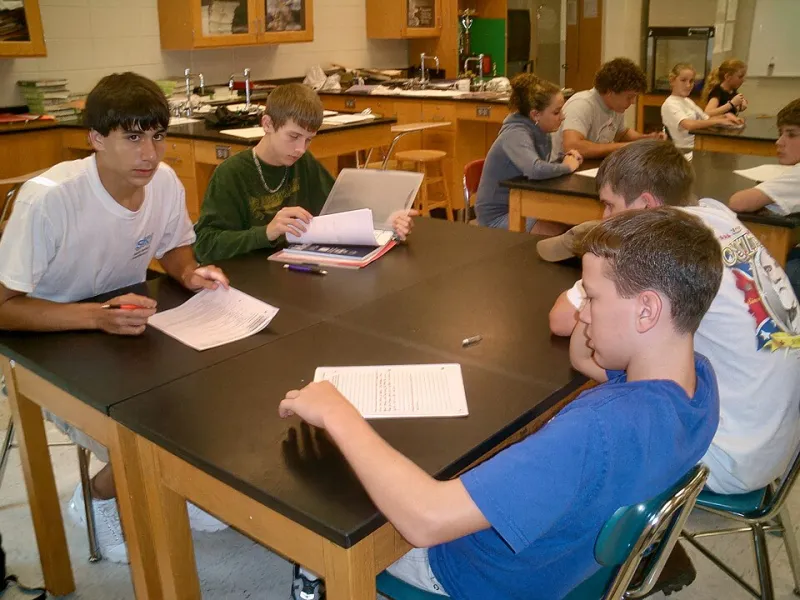
On a Tuesday afternoon in November, four Chikore High School students are standing around a cafeteria tray rack that does not exist yet. One holds a piece of corrugated cardboard. Another is measuring the distance between the tray slot and the counter with a borrowed tape measure. A third is sketching a ramp on butcher paper. The fourth is asking the cafeteria manager how often the tray station backs up during lunch.
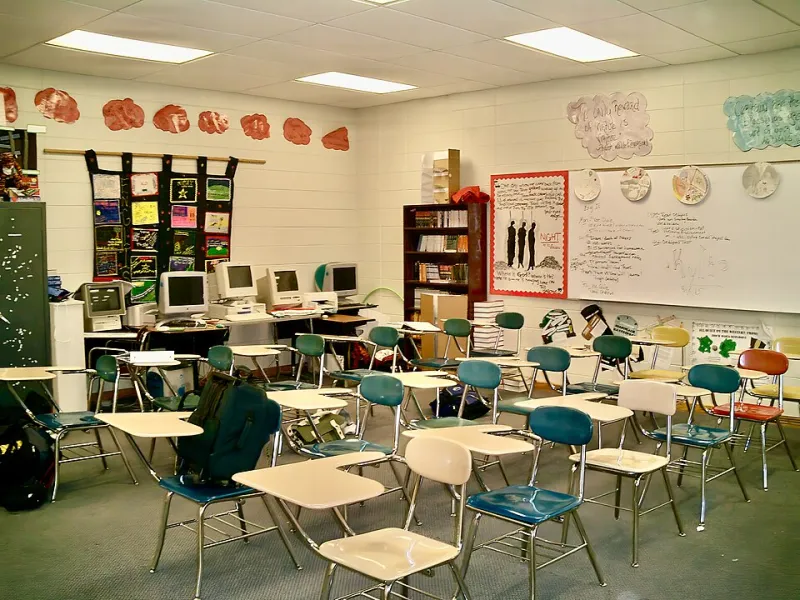
This is the Chikore Invention Lab, a new student-run space in a converted storage room near the design and technology wing. The lab opened this fall with a simple premise: students are surrounded by problems worth solving, and they do not need a business plan to begin. They need a question, a team, and permission to build.
A Lab Built Around Questions, Not Products
The invention lab is open to students in grades nine through twelve and has no prerequisites. Teams identify a problem on campus or in the surrounding community, interview the people affected, sketch ideas, build rough prototypes, test them, and revise. The lab has a modest materials budget, a wall of donated cardboard, and a safety protocol for tools. What it does not have is a requirement to find customers or project revenue.
That distinction matters. The lab is not a startup incubator, and students are not being asked to pitch venture capitalists. They are being asked to make something useful and explain their thinking. Teachers coach from the side. They ask questions such as 'What did you learn from the test?' and 'Who else might be affected by this change?' The language of design thinking—empathy, define, ideate, prototype, test—is used when it helps, but it is not the point. The point is disciplined problem solving.
One Project, Four Iterations
The cafeteria tray-return team began with a familiar complaint. At the end of lunch, the tray station becomes a bottleneck. Students stack trays at odd angles, spills happen, and the line backs into the dining area. The team interviewed cafeteria staff and counted tray traffic for three days. They found that the station's flat surface gave students no visual cue for where to place a tray.
The first prototype was a corrugated plastic ramp. It failed almost immediately. Trays slid too fast and overshot the stack. The team did not abandon the idea. They added rubber grips cut from old bicycle tubes. The second test was better, but the ramp was too narrow for the largest trays. The third version widened the angle and added a simple color-coded guide. By the fourth iteration, the backup had shortened during a two-day lunch test.
The team then pitched the idea to facilities staff. The pitch was ten minutes long and included a cardboard model, a tray, and a one-page summary of test results. The students did not get a grade for the presentation. They got something more useful: questions from adults who maintain the building every day. Could the ramp be cleaned easily? Would it fit the district's existing tray racks? The team left with a list of revisions, not a final verdict.
Design Thinking Without the Jargon
What the students are learning is not a vocabulary lesson. It is a habit of mind. They are learning to listen before they design, to test before they defend, and to treat failure as information. They are also learning to collaborate under mild pressure. The lab has one set of tools and several teams. Students must negotiate time, space, and materials.
That is why the lab is not only for future engineers. This fall's participants include students from theater, athletics, music, and journalism. One team is working on a better way to store stage props. Another is designing a quiet corner for students who need a break from crowded hallways. A third is studying whether a simple signage change can reduce confusion at the main office during morning arrival.
What the Lab Is Not
The invention lab is not a makerspace free-for-all. It has routines: a sign-in sheet, a safety check, a cleanup protocol, and a short reflection at the end of each session. It is also not a competition. Teams do not compete for a single prize. The goal is not a polished product but a disciplined process.
Nor is the lab a substitute for academic courses. It is an extracurricular space where students can apply what they are learning in science, math, and art to a practical problem. The cafeteria tray project, for example, required measurement, observation, and basic structural thinking. It also required the kind of persistence that is hard to teach from a textbook.
How Families Can Support Tinkering at Home
Families do not need a workshop to encourage this kind of thinking. A bin of cardboard, tape, string, and old containers is enough to start. When a student describes a project, ask 'What problem are you trying to solve?' rather than 'What are you making?' Let the first version be ugly. Praise revision, not just the final result.
Parents can also treat small household annoyances as design prompts. A messy backpack zone, a drawer that sticks, or a sibling disagreement over shared space can become a family prototype project. The rules are simple: define the problem, build a rough solution, test it, and ask what should change. Supervise tools, but resist the urge to take over. The struggle is where the learning happens.
Small Solutions, Serious Learning
The cafeteria rack may never be patented. That is not the point. If the prototype makes lunch a little calmer and teaches students how to listen, test, and try again, the lab has done its job. At Chikore High School, the cardboard test is not a lesser form of learning. It is a practical one—and it is preparing students to solve problems that do not come with an answer key.