Repairing the Room: Why Chikore Teaches Students to Apologize Well
Photo: G. Edward Johnson, CC BY 4.0, via Wikimedia Commons
An apology can be a sentence. Repair is a practice. At Chikore High School, that distinction has become central to how students learn to handle conflict.
The case for teaching apology is not sentimental. Schools already teach students to write thesis statements, solve equations, and cite evidence. They should also teach them to name harm, listen to its impact, and take concrete steps to make things right. These are not soft skills. They are the skills that make classrooms, workplaces, and families function.
The Difference Between Sorry and Repair
A quick apology can end a conversation without addressing the harm. 'Sorry if you felt that way' is not an apology; it is a way of placing the problem back on the person who was hurt. A real apology names what happened, acknowledges the impact, and commits to a change. That is harder than it sounds, especially for teenagers who are still learning to separate their identity from their mistakes.
This editorial argues that Chikore's restorative conversation model is worth the time it takes. It is not a soft alternative to discipline. It is a structured way to hold students accountable without shame, and to give them a path back into the community.
How Restorative Conversations Work at Chikore
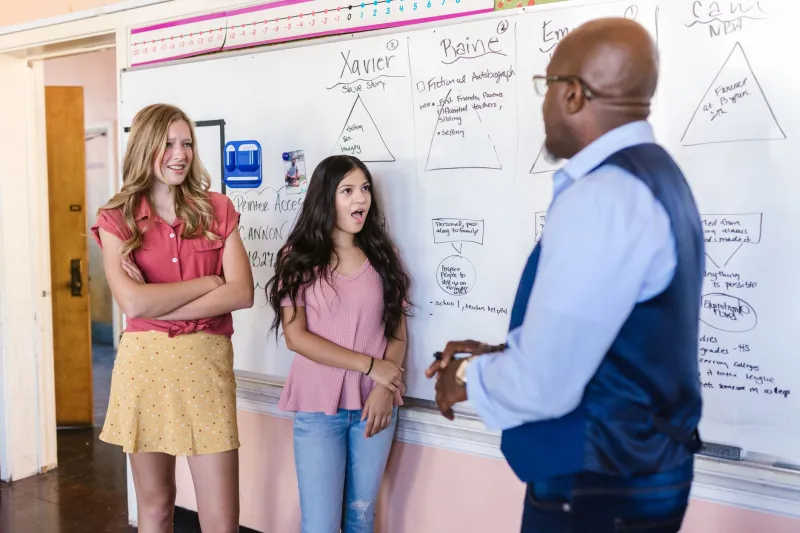
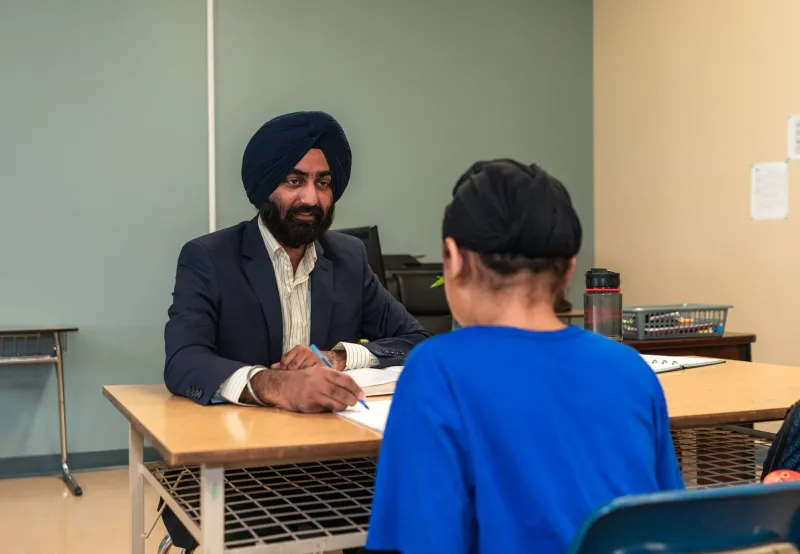
When a conflict occurs—an argument in a group project, a rumor in a hallway, a joke that lands badly—a teacher or trained staff member may invite the students involved into a restorative conversation. The conversation is not a court. It is not a debate to be won. Participation is voluntary where safety allows, and the facilitator's job is to keep the conversation focused on impact and repair.
The model uses a short sequence of questions: What happened? Who was affected? What do you need? What would make it right? Students are asked to speak for themselves, not to speculate about motives. The facilitator may push back on vague language. 'I was just kidding' is not a repair. 'I repeated a joke that embarrassed you in front of our lab group, and I will correct it with the people who heard it' is.
One recent example involved two lab partners. One student repeatedly talked over the other during a group project. The quieter student stopped contributing. A teacher noticed and invited both to a restorative conversation. The first student's initial apology—'Sorry if you felt that way'—was incomplete. With support, the student named the behavior: 'I interrupted you three times and made you feel like your ideas did not count. I will wait for you to finish before I respond.' The pair agreed on a signal for future disagreements. The project improved. More importantly, the relationship did.
Why This Matters Beyond High School
Students will leave Chikore and enter college dorm rooms, workplaces, and civic life. They will disagree with roommates, colleagues, and neighbors. They will hurt people, sometimes accidentally and sometimes not. The ability to repair trust is not a minor life skill. It is a form of maturity.
Adults are not naturally good at apology, either. Many of us learned to say sorry quickly and move on. We learned that conflict is embarrassing and that accountability is a punishment. Chikore's model offers a different script. It treats accountability as a form of respect. It assumes that people can learn from harm and rejoin the community.
A Framework Families Can Use
Families can use a simplified version of the same framework when sibling or household tensions flare. The steps are straightforward:
- Name the harm without excuses. 'You took my headphones without asking' is clearer than 'You always do this.'
- Ask about impact. 'What was that like for you?' gives the other person room to speak.
- Take responsibility. 'I should have asked first' is better than 'I didn't mean anything by it.'
- Make a plan. 'Next time I will ask before borrowing them' is a repair.
- Follow through. Trust is built by repetition, not by a single sentence.
Parents can model this without forcing it. A coerced 'sorry' teaches performance, not repair. Instead, a parent might say: 'I am not asking who started it. I am asking what needs to be repaired.' That shifts the conversation from blame to responsibility.
The Trust That Follows
An apology does not erase harm. It creates a record of accountability. It tells the person who was hurt that their experience mattered and that the relationship is worth repairing. That is a lesson worth teaching in high school, and one worth practicing at home. At Chikore, the goal is not to avoid conflict. It is to build students who know how to come back from it.