More Than a Seat at the Table: How Chikore High School Engineers True Belonging for Every Student

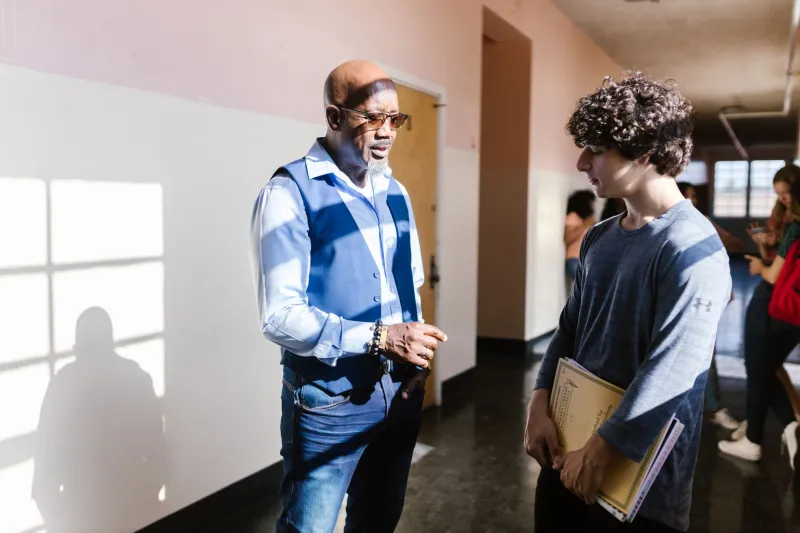
Photo by Photo by Vitaly Gariev on Unsplash on Unsplash
There is a meaningful difference between being present in a room and feeling like you belong in it. For millions of students across the United States — students from low-income households, first-generation college hopefuls, students of color, and those with learning differences — the American high school experience has historically offered the former while withholding the latter. They arrive. They sit. They persist. But they do so while quietly navigating a current of subtle exclusion that drains energy, dampens ambition, and widens the very achievement gaps that schools claim to be closing.
At Chikore High School, that distinction — between presence and belonging — sits at the center of everything we do.
What the Research Actually Says
The science of belonging in educational settings has grown considerably over the past two decades. Psychologist Gregory Walton and his colleagues at Stanford University have demonstrated that even brief, targeted belonging interventions — exercises that help students understand that self-doubt and social uncertainty are universal, not personal — can produce lasting improvements in academic performance, particularly among underrepresented groups. A sense of belonging, their research suggests, functions less like a comfort and more like a fuel source: when it is present, students take intellectual risks, seek help, and persist through difficulty. When it is absent, cognitive bandwidth is redirected toward managing social threat rather than learning.
The implications for schools are significant. Belonging is not a soft, supplementary concern. It is a structural one. And institutions that treat it as an afterthought — a diversity poster here, a heritage month assembly there — are not simply missing an opportunity. They are actively contributing to the problem.
Chikore's approach is built on this understanding.
Designing for Inclusion, Not Assuming It
One of the most common mistakes schools make is conflating diversity with inclusion. A diverse enrollment is a starting point, not a destination. True inclusion requires that the systems, relationships, and daily rhythms of school life communicate — consistently and credibly — that every student's presence is not merely tolerated but genuinely valued.
At Chikore, this begins before a student sets foot on campus for their first day of high school. Our transition programming for incoming freshmen is intentionally structured to surface common anxieties, normalize the experience of feeling like an outsider, and build cross-cultural friendships early. Research consistently shows that students who form at least one meaningful relationship with a peer or adult in the first few weeks of school are significantly more likely to remain engaged through graduation. Our orientation is designed with that data in mind.
Inside the classroom, Chikore faculty participate in ongoing professional development focused on culturally responsive pedagogy — an approach that recognizes students bring different frameworks, experiences, and communication styles to academic content, and that rigorous instruction can and should be adapted to honor those differences without lowering expectations. The goal is not to make content easier. It is to make it genuinely accessible.
Voices From the Chikore Community
Data tells part of the story. Students tell the rest.
Marcellus, a junior who transferred to Chikore after two years at a larger public school in his district, describes the shift in terms that are difficult to quantify but impossible to dismiss. "At my old school, I felt like I was always catching up — not academically, but socially. Like there was a code I hadn't been given. Here, I actually feel like my perspective is part of the conversation, not something I have to set aside to fit in."
Aniyah, a senior and first-generation college applicant, echoes that sentiment. Her parents did not attend college in the United States, and she entered high school carrying both ambition and a quiet anxiety about whether she truly belonged in spaces that had not historically welcomed people who looked like her. "The mentors here don't just tell you that you belong," she says. "They show you — by actually listening, by including your experiences in what we study, by not making me feel like I have to explain myself all the time."
These are not isolated testimonials. Chikore's internal data on student engagement, course completion, and grade-level retention reflects a consistent pattern: students from historically underrepresented groups who participate in our belonging-focused programming demonstrate stronger academic trajectories and higher rates of four-year graduation than comparable peer populations nationally.
Combating Subtle Exclusion: A Guide for Parents and Educators
Belonging is threatened not only by overt discrimination — which most schools are equipped to address — but by a more insidious category of experience that researchers call "microaggressions" and "ambient belonging uncertainty." These are the small, often unintentional signals that accumulate over time and communicate to certain students that they are guests rather than members of the community.
For parents, recognizing these signals in your child's experience is the first step. Warning signs include a student who is academically capable but increasingly reluctant to participate in class, who avoids extracurricular activities despite expressed interest, or who describes school in terms of endurance rather than engagement. These patterns often have less to do with academic preparation and more to do with the social and psychological experience of the environment.
For educators — and for schools evaluating their own practices — the questions worth asking are structural: Who is represented in the curriculum, and whose stories are treated as universal versus particular? Who speaks most in collaborative settings, and what systems exist to ensure that quieter voices are actively invited in? Who is referred for advanced coursework, and is that referral process examined for patterns of bias?
At Chikore, these are not rhetorical questions. They are part of a continuous, honest evaluation of how we are doing — and where we need to do better.
Belonging as an Academic Strategy
It would be a mistake to frame Chikore's commitment to inclusion as separate from our academic mission. The two are inseparable. Students who feel they belong in an institution are more likely to attend consistently, engage deeply with course material, seek out teachers and counselors when they need support, and ultimately complete the preparation necessary for college and career success.
The science of belonging, in other words, is also the science of achievement. And at Chikore High School, we believe that every student — regardless of background, identity, or prior experience — deserves both.